

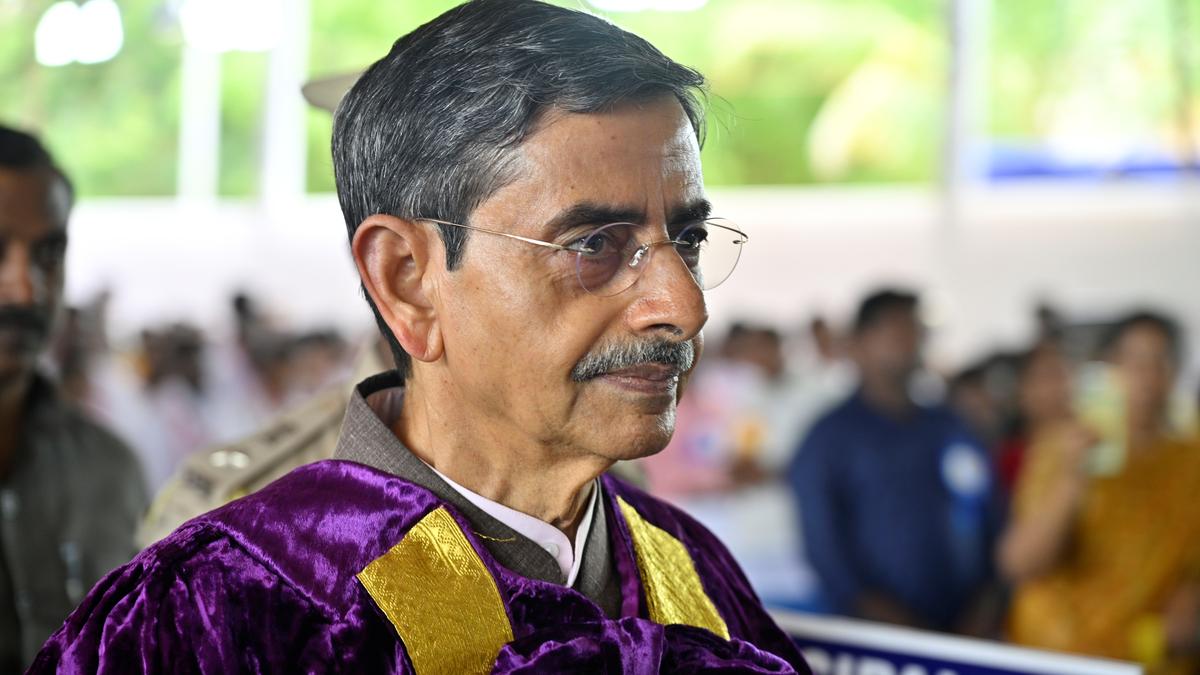
NEW DELHI: The Tamil Nadu government filed a suit in the Supreme Court on Saturday challenging the State Governor R.N. Ravi’s decision to reserve the Kalaignar University Bill 2025 for consideration of President of India, instead of granting assent to proposed law as advised by State Council of Ministers.
In the writ petition filed under Article 32, Tamil Nadu contends that the Governor’s action is illegal, patently unconstitutional and void-ab-initio for being violative of Articles 163(1) and 200 of the Constitution. The State government is represented by senior advocate P. Wilson and advocate Misha Rohatgi Mohta.
The State has sought a declaration that the Governor’s decision to reserve the Bill (LA Bill No. 19 of 2025) is uconstitutional long with quashing of the Governor’s communication dated July 14, 2025 which conveyed the decision to refer the Billl to the President.
The court on September 9 reserved for judgment a Presidential Reference which has brought into sharp focus the schism between Opposition-ruled States and their Governors over delay in clearing crucial laws.
The petition asserts that under the constitutional scheme, the Governor is bound to act on the aid and advice of the State Cabinet and has no independent discretion to reserve such a Bill unless it falls within the specific exceptions mandated under the Constitution.
It may be noted that a 5-judge bench of the Supreme Court last month reserved its opinion on the reference made by the President on questions relating to the grant of assent to Bills. The Presidential Reference was made soon after a two-judge bench of the Supreme Court delivered the judgment laying down timelines for the President and Governor to grant assent to Bills in a petition filed by the State of Tamil Nadu.
The Kalaignar University Bill, 2025, passed by the Tamil Nadu Legislative Assembly earlier this year! seeks to establish a new state university named after former Chief Minister M. Karunanidhi (popularly known as “Kalaignar”). The proposed university is aimed at expanding access to higher education, fostering research, and promoting Tamil language, culture, and social justice values through its academic framework. The Bill was cleared by the Assembly and sent to the Governor for assent following Cabinet approval. However, the Governor chose to reserve it for the President’s consideration.

