

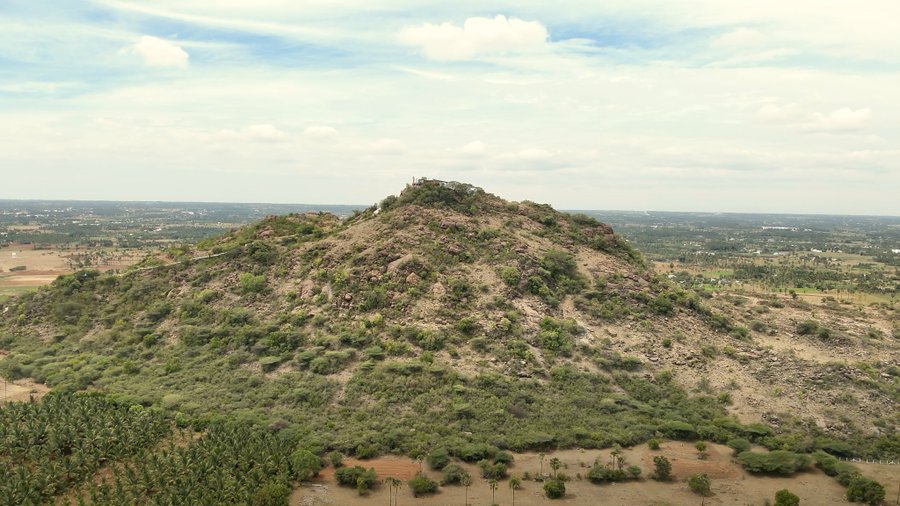
CHENNAI: Tamil Nadu government notified Nagamalai hillock in Erode district, spanning over 32 hectare, as the state’s fourth Biodiversity Heritage Site (BHS) under Biological Diversity Act, 2002.
“Spanning 32.22 hectares, Nagamalai is a living mosaic of dry deciduous, thorny and scrub forests, home to 138 plant species, 118 bird species, 7 mammals, 11 reptiles, 5 spiders and 71 insects. It is also a cultural treasure, with Iron Age cairn circles, ancient rock shelters, and a centuries old stone carvings,” Supriya Sahu, Additional Chief Secretary to Government, Environment, Climate Change and Forest Department, wrote in a social media post.
This follows the notification of Arittapatti in November 2022, Kasampatti in March 2025, and Elathur Lake in August 2025, stated a press release issued by the government on Wednesday.
“Evidence from cairn circles of the Iron Age, rock shelters, and artefacts of ancient significance highlight its historical depth. A 400-year-old stone carving of Lord Anjaneya, recorded by the Archaeology Department, underscores its cultural heritage,” she said in a press release.
“This declaration not only protects critical habitats and migratory bird corridors, but also safeguards the cultural heritage and local conservation values upheld by the Elathur Town Panchayat.” She said.
The Elathur town panchayat passed a resolution on January 22 supporting the notification and the district collector endorsed the notification through a letter dated January 28.
Tamil Nadu, with 20 Ramsar sites (wetlands of international importance), the highest in India, has established dedicated conservation funds for endangered species, and taken steps to secure ecologically sensitive areas, added the press release.
Biodiversity Heritage Sites are ecologically significant areas that support unique and fragile ecosystems. They protect rare, threatened, and keystone species, preserve evolutionary importance, and reinforce cultural ties with nature.

