

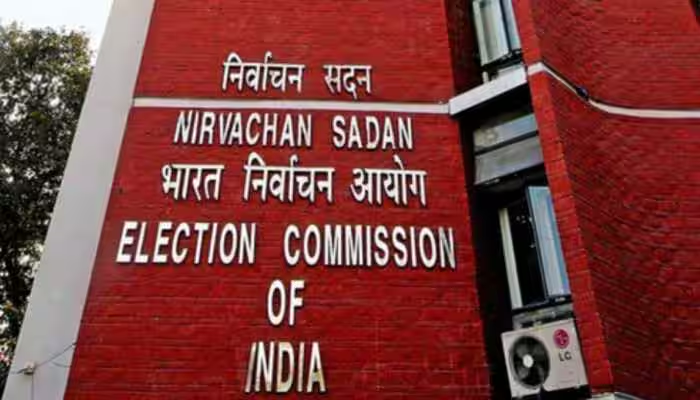
NEW DELHI: The Election Commission of India (ECI) has directed that all political parties and contesting candidates must seek pre-certification from the Media Certification and Monitoring Committee (MCMC) before releasing any political advertisements on electronic media, including social media platforms. This ruling applies to all national and state political parties and candidates must declare an authentic social media account.
Political parties should approach MCMCs at the district and state level for the pre-approval of any political content intended for public dissemination. According to the statement, MCMC has been formed at the district and state level, and it maintains a persistent vigil.
According to the commission order dated October 14, 2025, the directive will apply ahead of the Bihar assembly polls and by polls in eight assembly constituencies across six states and the Union Territory of Jammu and Kashmir.
The political parties and candidates have been directed to submit a report of the expenditure made for any such campaign and other operational expenditure during the period of the election within 75 days of the completion of the assembly elections, under section 77(1) of the Representation of the People Act 1951.
The Election Commission of India, during the General Assembly election, allowed the ruling BJP to blatantly violate the Model Code of Conduct. It said no political advertisements were allowed one day before poll day, but most of the newspapers displayed full-page religious messaging of the BJP.
The rule only applied to opposition when Dordarshan censored opposition on the pretence of MCC.
The AIR and Doordarshan asked CPIM general secretary Sitaram Yechury and All India Forward Bloc leader G Devarajan to omit phrases like “communal authoritarian regime”, “Muslim”, and “draconian laws” before the General Assembly election in 2024.
However, a report shows that Prime Minister Modi went on to use words like “Muslims”, “vote jihad” and “Ram temple”. He also blatantly spread misinformation, such as: In Karnataka, ”all Muslims have been turned into OBCs overnight”, and in Kolkata, opposition would redistribute wealth to those who do “vote jihad”, to name only a few.
Even though the EC mandate of pre-certification of all political ads is intended to increase transparency and stop the spreading of inflammatory content and fake news, it may also be used for preemptive, partisan censorship. While ostensibly neutral, it could disproportionately affect dissenting voices and opposing political parties if the commission leans towards the ruling party, which has been the case till now.
Political analysts see this rule as a shortcut to backdoor to censorship.

