

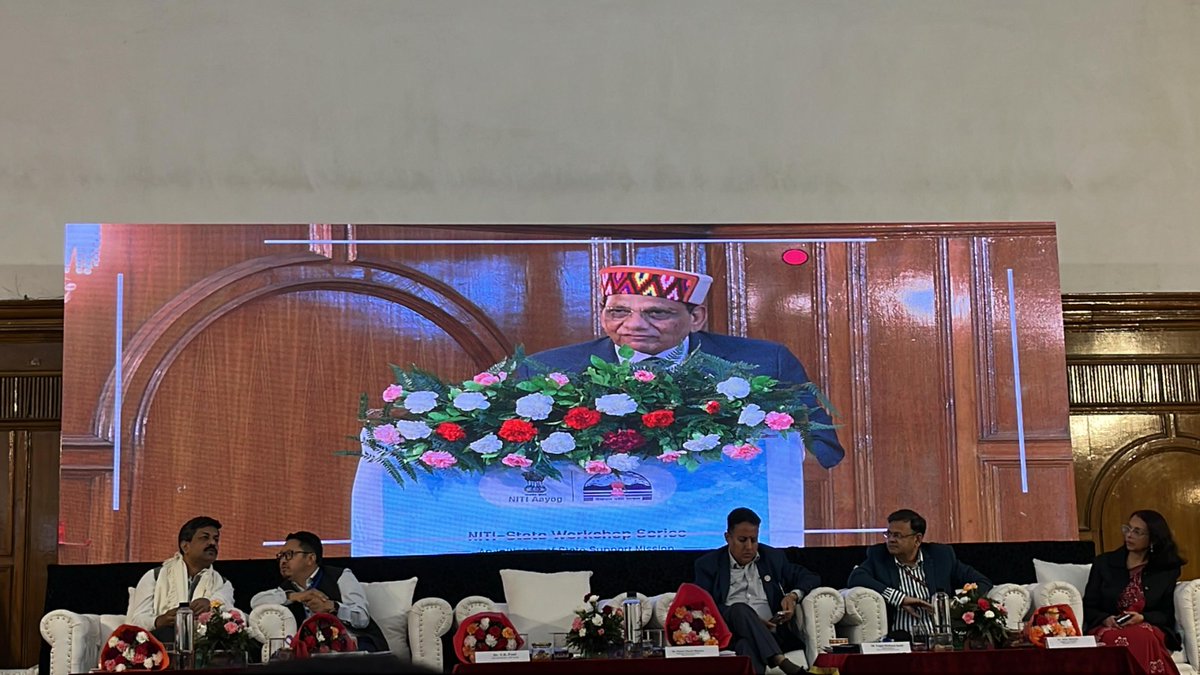
NEW DELHI: In a major initiative to strengthen water security and resilience in high-altitude Himalayan regions, NITI Aayog organized a Brainstorming Session and released a Compendium on All-Weather Tap Water Supply in the Higher Reaches of the Himalayas in New Delhi today. The event brought together senior officials, domain experts, researchers, and grassroots organizations to deliberate on innovative, community-driven, and technology-based solutions for ensuring sustainable drinking water supply in the country’s most ecologically fragile mountain ecosystems.
The session saw active participation from the Ministry of Jal Shakti – Department of Drinking Water and Sanitation, representatives from the Himalayan States and Union Territories including Ladakh and Himachal Pradesh, IIT Mandi, and several civil society organizations working on water conservation and natural resource management in the region.
Opening the session, senior officials from NITI Aayog highlighted the critical importance of water security in Himalayan areas that face extreme climatic and geographical challenges. These high-altitude regions—often characterized by snow-fed streams, freezing temperatures, glacial dependence, and fragile geology—face unique difficulties in ensuring year-round potable water supply to remote habitations.
The discussions underscored the need to move from seasonal, source-dependent systems to resilient, all-weather water infrastructure, combining engineering innovation, local knowledge, and community participation.
Experts pointed out that climate change-induced variability in precipitation patterns, shrinking glaciers, and the depletion of traditional water sources such as springs have made sustainable water management an urgent developmental priority for the Himalayas.
One of the central themes of the brainstorming session was the active involvement of local communities in water and natural resource management. Experts agreed that while central and state governments are investing heavily in rural water supply infrastructure, community ownership is the key to the long-term success and sustainability of these interventions.
Participants emphasized that empowering local communities through training, institutional capacity-building, and recognition of traditional wisdom can strengthen the management and maintenance of water supply assets.
They discussed how local water user committees, women’s self-help groups, and village water sanitation committees (VWSCs) can be pivotal in ensuring last-mile delivery, monitoring quality, and reducing system failures due to maintenance neglect.
“Water security is not just about engineering solutions—it’s about people. Communities must not only be beneficiaries but co-owners of the infrastructure that sustains their lives,” one participant noted.

